
It began with the idea...
…that pasteurizing the milk that calves drank would drastically improve their overall health.
1999
The Origin
A Moonshine Still in the Parlor
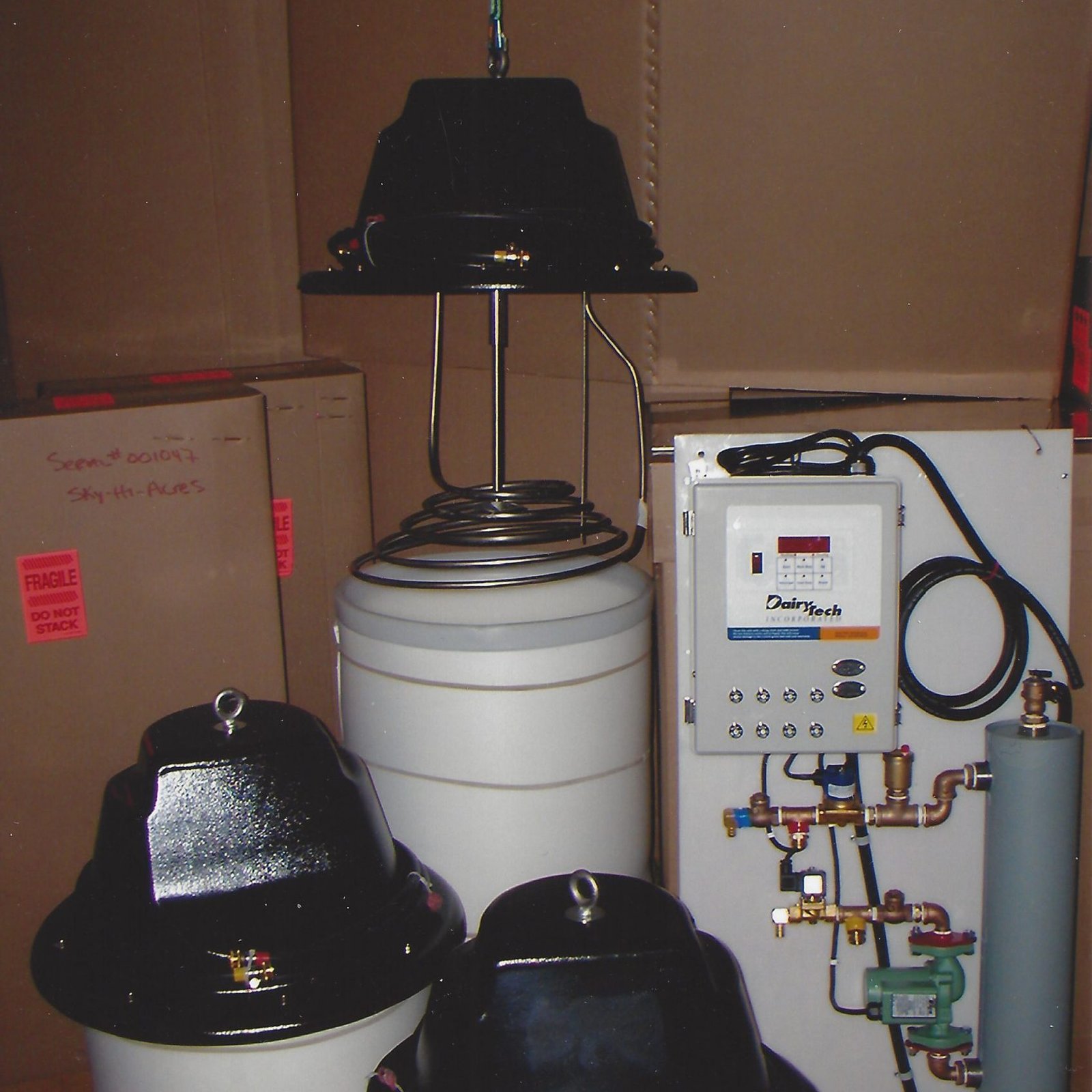
In the fall of 1999, like so many autumn seasons, calf morbidity and mortality were spiking as the weather turned for the worse in Colorado. Disease is the culmination of a taxed immune system that has been confronted by a heavy pathogen burden. In discussion with a progressive dairy client, Dr Richard Dumm wanted to explore the notion of pasteurizing the waste milk being fed to his calves as a way to improve the “groceries” while also decreasing the “bug” load in the food source. Nothing was really available at the time other than $25,000-$50,000 machines.
For this 600 cow dairy, the high price was not an option.
Using a bit of innovative shop work and a quick study of electronic control systems the first prototype was constructed and placed in the parlor. Employees were instructed to open valves based on when certain lights popped on and the equipment had an eerie resemblance to a moonshine still; nonetheless, the results were almost immediate.
- Calf scours dropped 90%
- Weight gains were noticeable within days
- Mortality Rate Plummeted
- Employees Rejoiced!!!!! Only a few calves to treat compared to a mortality rate that was topping 12%
Dr Rick accomplished more health improvement in 1 month with this machine than had been managed with years of vaccinations, antibiotics and supplementation.
2000
Incorporated

From Contraption to Equipment
By early 2000, Dairy Tech Incorporated was officially registered as a Colorado corporation. Engineers were hired to transform the moonshine-still prototype into something that looked, and behaved, like real equipment.
Progress was slow and expensive. Not nearly as slow as the education piece would be. Rick spent the next four years explaining the idea to colleagues and dairy producers — most of whom had been told for decades that pasteurization wasn't worth the trouble.
2003
The University Trial
Minnesota Says Yes
First academic validation: University of Minnesota field trial, 2003.
The University of Minnesota agreed to a field trial. A handful of farms, willing to try the equipment in real conditions.
The results were compelling enough to open minds that had been closed for years. So Dairy Tech hit the trade show circuit and started spreading the word the only way that actually works — one operation at a time.
2006
The Breakthrough
Colostrum, Pasteurized
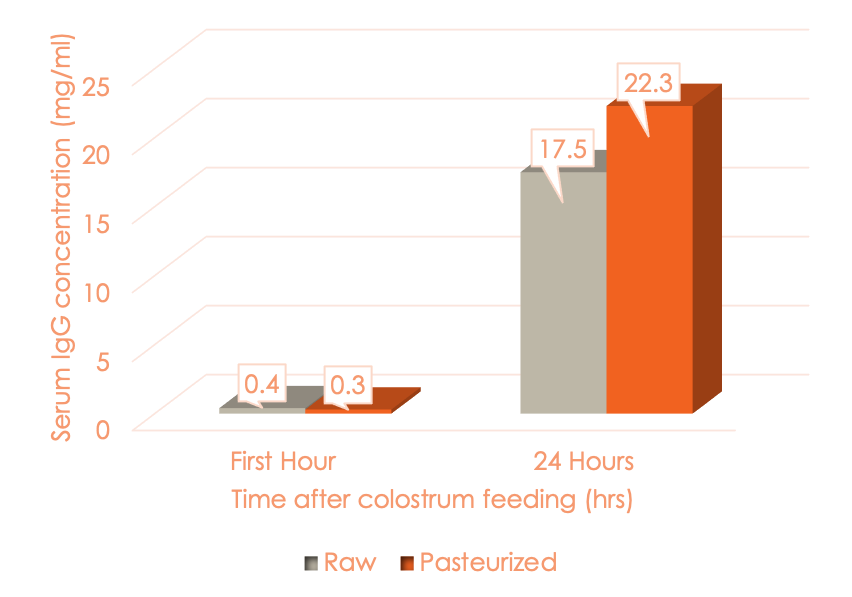
2006 saw the first colostrum pasteurization trials on a 2500 cow dairy in Colorado. Prior to that it was deemed that colostrum could not be pasteurized. Again, with the aid of Dr Sandra Godden at the University of Minnesota the trials proved that indeed the colostrum was difficult to work with but that the absorbed levels in the blood of the calf far outweighed those fed raw colostrum.
Intrigued yet excited by these conflicting results, further studies were carried out to determine the exact temperatures and times that would yield both a quality product and one that was protected from degradation. During this 10-year period from 2001-2011 Dairy Tech continued to improve upon the designs of the equipment to give them reliability and longevity on the dairy.
We had now become the ONLY company in the world to have proven results in pasteurization of colostrum for cattle.
2010
Product Launch
The Perfect Udder® Bag
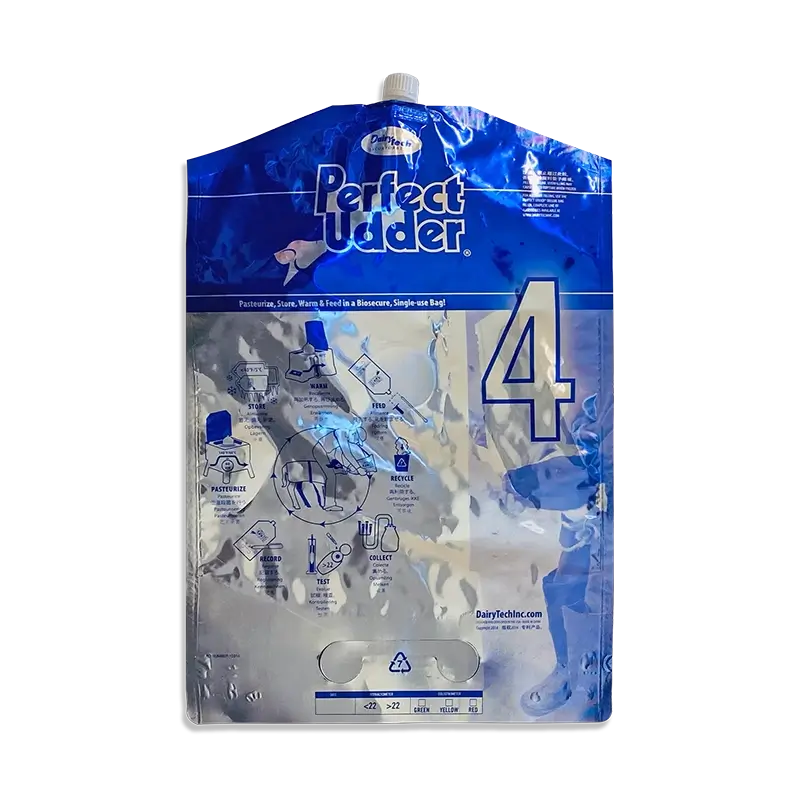
The original Perfect Udder® — store, freeze, thaw, feed, discard.
Even after pasteurization, customers found new ways to contaminate the colostrum between the machine and the calf. A new bucket here. A poorly cleaned bottle there. The system was as weak as its weakest link.
The answer was a scientifically designed, single-use aluminum bag. Store, refrigerate, freeze, reheat, feed — all from one sealed bag, then discard. No re-contamination surface. No cross-batch transfer.
Reception was a pleasant surprise. The bags now pull the rest of the equipment along behind them.
3,000,000+
Bags sold in 2020 alone
95%
Customer retention rate
2011
Solving Re-Heat
MilkWorks™
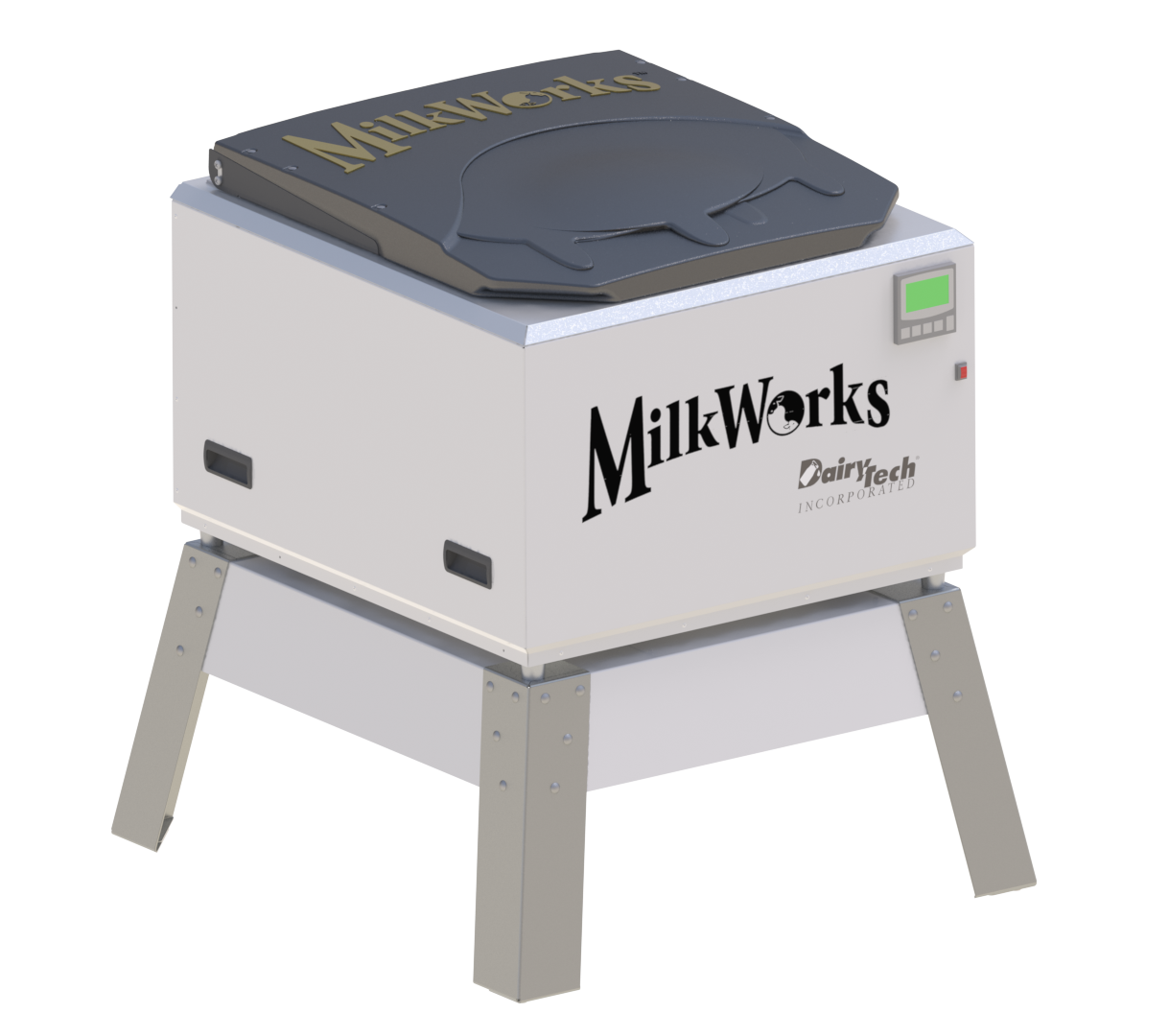
Even with the bag, dairies were still ruining the colostrum in the last 60 seconds. Buckets of hot tap water, guesswork on temperature, proteins damaged or under-absorbed.
Too cold and IgG absorption drops. Too hot and the proteins denature — sometimes the calf takes mild burns to the esophagus.
MilkWorks™ solved the thaw-and-warm step with a pre-warmed water bath designed around the bag itself. Works with standard 2-quart bottles too. The last 60 seconds finally became as controlled as the first 60.
2012
Oxford Ag
Fill, Shake, Feed

Oxford Ag launched as a sister line — products you fill with warm water, shake, and feed. No reconstitution math, no calibration, no extra steps for the calf-care employee at 4 AM.
- Colostrum100 — colostrum supplement
- Colostrum150 — colostrum replacement
- Electrolyte Premium Solution
- RanchKIT
All packaged in the Perfect Udder®. We offer this packaging to a select few suppliers, but every bag is Perfect Udder branded.
2014
Second Feed
The 2-Liter Bag

The 2L bag, sized for the critical second feeding.
Research kept showing the same pattern — a second feeding of 2L within 8 to 12 hours of birth materially improved health outcomes and lifetime production. The first feeding gets headlines. The second feeding gets results.
Dairy Tech released the 2L Perfect Udder® bag specifically for that second feeding.
2017
Better Tools
A Tube for Small Calves
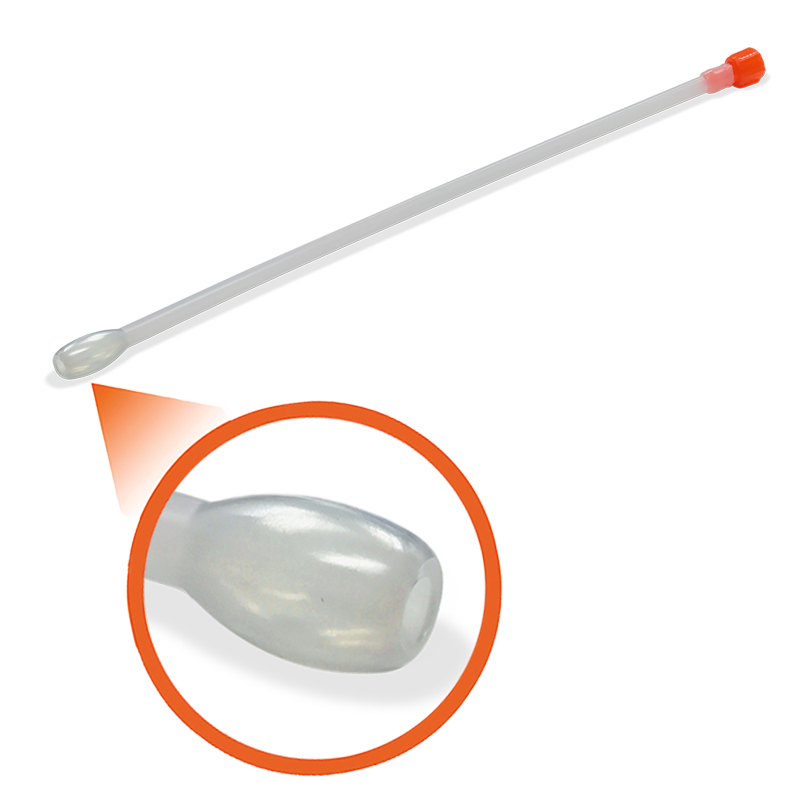
FeedTube C — the only disposable small-calf esophageal feeder in the world.
Small calves need a tube with a smaller safety bulb — gentler on the esophagus, but still wide enough to resist insertion into the trachea. Nobody made one.
Dairy Tech's R&D produced an esophageal tube specifically for calves under 66 lbs / 30 kg. Disposable. Biosecure. Still the only one of its kind in the world.
The same year, the original Perfect Udder® bag got its patented Center-Seal redesign: 30%+ better heat transfer, faster cooling and heating, easier stacking and storage.
30%
Faster heat transfer
<66 lb
Calf weight the new tube was built for
2019
Matilda®
Built for the Bag
Matilda® — designed around the Perfect Udder® bag from the first sketch.
The larger pasteurizers did high volumes well. But the workflow had evolved — most dairies were running individual Perfect Udder® bags, and a pasteurizer designed around the bag itself was overdue.
Matilda® was an immediate hit, domestically and internationally. The Perfect Udder® App launched the same year, giving customers a way to interact with her remotely.
2021
Adda™
Stainless. Touchscreen. Connected.
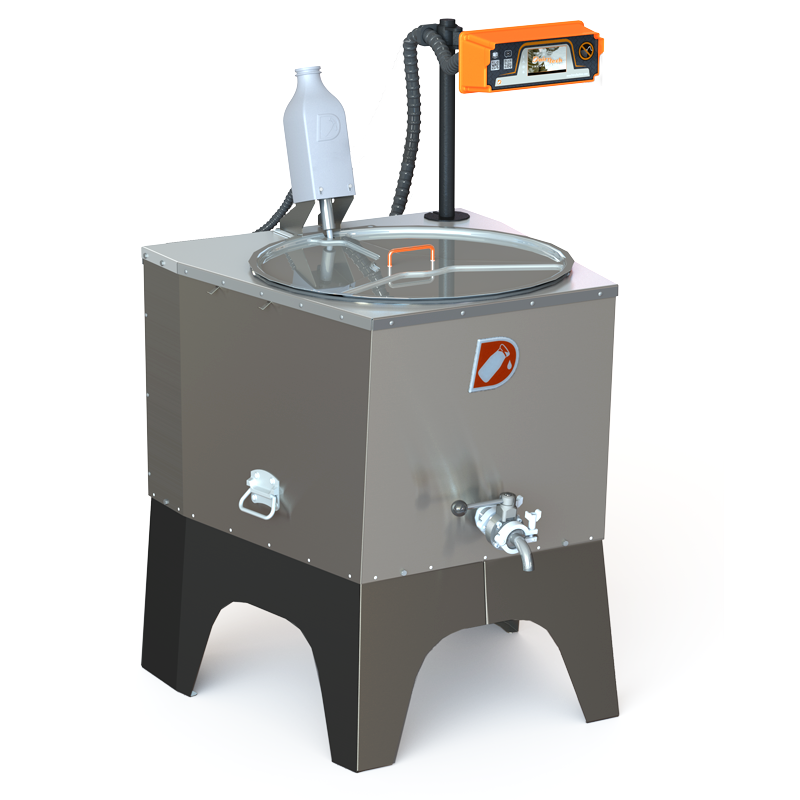
Adda™ is the high-volume answer to Matilda's mid-volume win. Stainless steel enclosure. Swing-away touchscreen controller. Full integration with the Perfect Udder® App.
Same mission, scaled up: kill pathogens, simplify the workflow, improve biosecurity, lower costs, raise profits. Healthy calves grow into productive cows, and productive cows determine the long-term health of the herd.
Today, the scientific community has publicly named Dairy Tech the gold standard in wet calf management. There are units on 20+ university research sites across the US.
Today
HOME
Same Building, Bigger Mission
The new building stands on the property where the first prototype was bolted together in 1999. Different floor. Same view.
If you're in the neighborhood, stop by and say hello. We'd love to see you.
Rick Dumm, DVM
Owner, Creator & Idea Generator